Aadic Dental Clinic logo aadicDental ClinicAdvanced Aesthetic Dental & Implant Care Call
Home  /  Services
Services

Our treatments

From preventive care to implants and smile makeovers, every treatment is planned with our team of specialists.

Dental Implants
01

Dental Implants

A permanent, natural-looking replacement for one or more missing teeth.

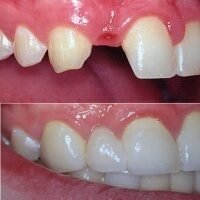
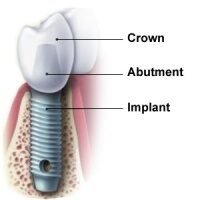
A dental implant is a titanium rod placed into the jawbone to replace one or more missing teeth. It acts as a substitute for the natural root and supports a fixture called an abutment, a small post that extends into the mouth through the gum. A crown or bridge is then fixed onto the abutment with special cement or screws.

Although it is made of three separate parts, most people simply call the rod, abutment and crown together an implant. The crown or bridge is fixed permanently, unlike dentures that need to be taken out daily.

An over-denture is a denture secured by implants. It is not fixed permanently, but the implants greatly improve how well it stays in place.

Book a consultation
Smile Designing
02

Smile Designing

Harmonising your teeth, gums and face for a confident, beautiful smile.

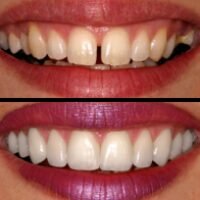
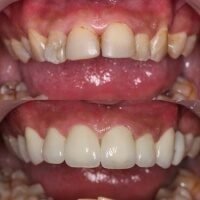
A smile depends on the facial muscles and the teeth, but not everyone is fortunate enough to have a beautiful one. Aesthetic dentistry has advanced in leaps and bounds with the latest technologies and materials, and offers an answer.

A prosthodontist is often the best person to assess the quality of a smile, and to improve it with innovative techniques and state-of-the-art restorative materials, planning restorations that harmonise with the smile.

A harmonious smile needs a perfect integration of facial composition (the hard and soft tissues of the face) and dental composition (the teeth and their relationship to the gums). Every smile design we plan evaluates both.

Book a consultation
Aesthetic Restoration
03

Aesthetic Restoration

Conservative, layer-by-layer restoration that looks and feels natural.

Aesthetic restoration is the most tooth-saving way of restoring teeth. It preserves the maximum of the tooth's hard tissue so that teeth remain healthy and viable. The tooth's layers, translucency, depth and shape are fully and naturally restored.

During the procedure, the tooth is rebuilt layer by layer. In clinical practice, a restoration done under a bright dental lamp can look quite different when the light changes, so we carefully select restorative materials that match the colour of your tooth for a result that is closest to natural tooth tissue.

Book a consultation
Root Canal Treatment
04

Root Canal Treatment

Saving badly decayed or infected teeth, often in a single sitting.

A root canal is a treatment used to repair and save a tooth that is badly decayed or infected. When the nerve tissue or pulp of a tooth is damaged, it breaks down and bacteria begin to multiply inside the pulp chamber, which can lead to infection or an abscess.

During the procedure, the nerve and pulp are removed and the inside of the tooth is cleaned and sealed. Without treatment, the tissue around the tooth can become infected and abscesses may form.

“Root canal” is the term for the natural cavity in the centre of the tooth. The soft area inside it is the pulp, and the tooth's nerve lies within the root canal. Where suitable, we offer single-sitting root canal treatment to avoid multiple injections and visits.

Book a consultation
Orthodontic Treatment
05

Orthodontic Treatment

Straightening teeth and correcting the bite for a healthier mouth.

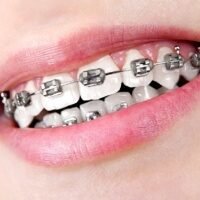
Orthodontic treatment corrects teeth and jaws that are positioned improperly. Crooked teeth, and teeth that do not fit together correctly, are harder to keep clean and are at risk of being lost early to tooth decay and gum disease.

A poor bite also puts extra stress on the chewing muscles, which can lead to headaches, TMJ problems and neck, shoulder and back pain. Crooked or misplaced teeth can also affect one's appearance.

The benefits of orthodontic treatment include a healthier mouth, a more pleasing appearance and teeth that are more likely to last a lifetime.

Book a consultation
Crowns – Metal & Ceramic
06

Crowns – Metal & Ceramic

Caps that protect, strengthen and restore damaged teeth.

A dental crown (also called a cap) is a fixed prosthesis cemented onto a tooth; once in place, only a dentist can remove it. Its main purpose is to cover a damaged tooth, but it also strengthens it and improves its appearance and alignment.

Crowns are made from an impression of the teeth they will cover. Before the impression is taken, the dentist reduces the tooth's size so the crown fits properly, and may place a temporary crown while the permanent one is being made.

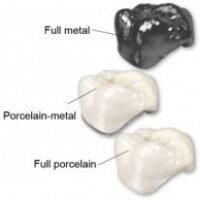
Crowns and bridges can be made from metal alloy or porcelain bonded to metal. Newer “metal-free” tooth-coloured options are strong and look very natural, and all-porcelain bridges are now strong enough for back teeth as well as front.

Book a consultation
Porcelain Laminate Veneers
07

Porcelain Laminate Veneers

Thin, natural-looking shells that transform the front of your teeth.

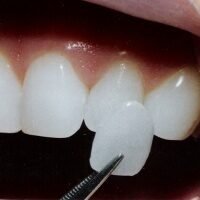
A veneer is a layer of material placed over a tooth, either to improve its appearance or to protect its surface from damage. Veneers are made from composite or dental porcelain.

A composite veneer may be built up directly in the mouth or made in a dental laboratory and later bonded to the tooth with a resin cement. A porcelain veneer is always made in the laboratory.

A laminate veneer is a thin layer that covers only the front surface of the tooth and is generally used for aesthetic purposes. Veneers can also close small gaps between teeth by improving their shape, including gaps near the gum where it has receded.

Book a consultation
Teeth Whitening
08

Teeth Whitening

A quick, safe way to brighten your natural tooth colour.

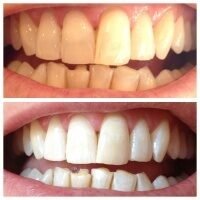
Tooth whitening is a very effective way of lightening the natural colour of your teeth without removing any of the tooth surface. It cannot make a complete colour change, but it can lighten the existing shade.

It is quick, safe and simple, yet it can completely transform your smile. Whitening is often combined with composite bonding as part of a smile makeover: a quick, non-invasive and affordable way to restore a youthful look to discoloured, chipped or worn teeth.

Book a consultation
Fixed Partial Dentures
09

Fixed Partial Dentures

Replacing missing teeth with fixed or removable bridges and dentures.

A fixed partial denture (bridge) replaces missing teeth by attaching artificial teeth to the neighbouring natural teeth, called abutment teeth. Bridges can be fixed permanently or be removable.

Fixed bridges are attached either by placing crowns on the abutment teeth or by bonding the artificial teeth directly to them. Removable bridges are held with metal clasps or precision attachments.

A denture is a plate carrying one or more false teeth. Partial dentures may be plastic, a mix of metal and plastic, or a flexible material such as Valplast; complete dentures are normally plastic. Complete dentures can also be secured to implants as over-dentures, which greatly improves how well they stay in place.

Book a consultation
Maryland Bridges
10

Maryland Bridges

A conservative bridge bonded to neighbouring teeth with little or no drilling.

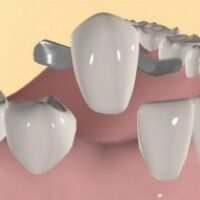
A Maryland bridge consists of a metal framework with a porcelain tooth baked onto the front. The result is a false tooth with two small metal wings, which are bonded to the back of the teeth on either side of the gap.

Bridges suit people who have one or two teeth missing and prefer not to wear a denture. A conventional bridge crowns the teeth either side of the gap and joins them with a false tooth in the middle.

An adhesive (Maryland) bridge is a gentler option: its wing is bonded to the back of the supporting tooth with very little or sometimes no drilling, using a very strong dental cement.

Book a consultation
Flap Surgery
11

Flap Surgery

Advanced gum treatment for moderate to severe periodontitis.

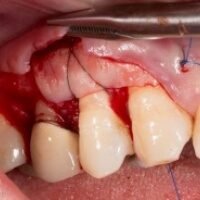
Flap surgery is a gum procedure in which the gums are gently separated from the teeth and folded back temporarily, allowing the dentist to reach the root of the tooth and the bone.

It is used to treat gum disease (periodontitis) and may be recommended for moderate or advanced cases. Usually a non-surgical treatment called scaling and root planing is tried first; if that does not clear the infection, flap surgery may be advised, sometimes together with osseous (bone) surgery.

Book a consultation
Apicectomy
12

Apicectomy

Root-end surgery when a root canal alone cannot clear an infection.

An apicectomy is an endodontic surgical procedure that removes the tip of the tooth root along with the infected tissue around it.

It is usually recommended when a regular root canal treatment has not removed all the infection, especially if the patient still has significant discomfort afterwards. The procedure takes about one to two hours and is carried out under local anaesthesia.

Book a consultation
Oral & Maxillofacial Surgery
13

Oral & Maxillofacial Surgery

Specialist surgery of the mouth, jaws and face.

Oral and maxillofacial surgery (OMS) treats a wide range of diseases, injuries and defects of the head, neck, face and jaws, and of the hard and soft tissues of the mouth and jaw region.

It is an internationally recognised surgical specialty, and all types of extractions, including surgical and wisdom tooth removal, are carried out under proper sterilisation care.

Book a consultation
Book a visit

Let the beautiful smile remain with you forever.

Every dental problem is treated after discussion with our team of specialist doctors. Call us or request an appointment online.